
+86 192 3098 1308 jaycee70224@163.com +852 9308 6746
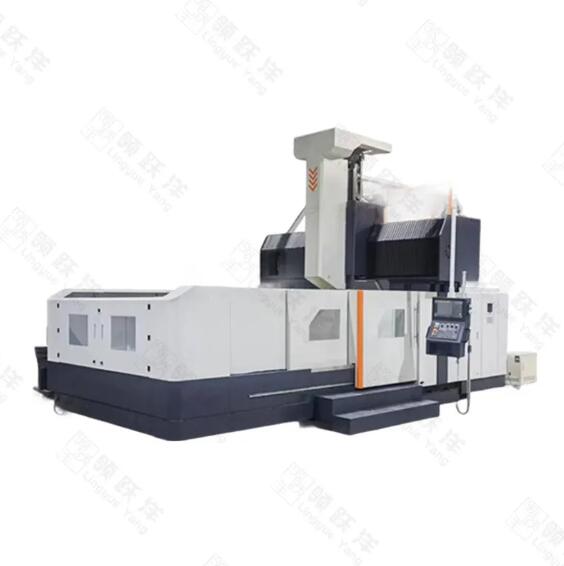
A gantry machining center is a type of CNC machine tool designed for large-scale, high-precision machining of heavy, oversized, or complex workpieces. It is widely used in industries that require stable performance, high accuracy, and efficient material removal on large parts.
Unlike conventional vertical or bridge-type machining centers, a gantry machining center features an overhead gantry structure that spans across the worktable. This design allows the spindle system to move above the workpiece while maintaining high rigidity and stability throughout the machining process.
The gantry machining center is built around a rigid frame system that ensures accuracy under heavy cutting loads. Its main structural components include:
The gantry consists of two vertical columns and a crossbeam connecting them. This overhead structure supports the spindle movement and distributes machining forces evenly, reducing vibration and deformation during operation. The frame is typically made of high-strength cast iron or welded steel structures that are treated to improve stability and reduce internal stress.
The worktable is usually large and rectangular, designed to hold oversized workpieces. It is built for strong load capacity and high flatness retention, making it suitable for precision machining of large parts such as molds, structural components, and tooling plates.
The spindle is the core cutting component that holds and rotates the tool. Depending on machining requirements, it can operate at high speeds for fine finishing or deliver high torque for heavy cutting operations. The spindle’s performance directly affects machining accuracy and surface quality.
A gantry machining center typically operates on three linear axes. Servo motors drive movement along these axes through precision transmission systems such as ball screws or linear guides, ensuring smooth and accurate tool positioning in three-dimensional space.
The CNC system acts as the control hub of the machine. It interprets programmed instructions and coordinates all machine movements, including axis motion, spindle operation, and tool changes. It also supports automation functions such as path optimization and real-time adjustments.
Many gantry machining centers are equipped with an automatic tool changer, which allows tools to be switched automatically during machining. This improves efficiency, reduces downtime, and enables multiple machining operations in a single setup.
The tool magazine stores multiple cutting tools and supplies them to the spindle when needed. It is designed in different forms, such as chain-type or drum-type structures, depending on capacity and application requirements.
For complex machining tasks, interchangeable auxiliary heads such as angle heads or extension heads may be used to increase machining flexibility and reach difficult positions.
The working process of a gantry machining center follows a coordinated CNC-controlled sequence:
The workpiece is securely fixed onto the large worktable using clamps or custom fixtures.
The CNC program is loaded into the control system, defining machining paths and operations.
The gantry structure moves along the X, Y, and Z axes according to programmed instructions.
The spindle rotates at the required speed, and the cutting tool removes material from the workpiece.
The automatic tool changer switches tools when different machining operations are required.
Coolant is applied during machining to reduce heat, improve tool life, and remove chips.
This fully automated process ensures consistent precision, efficiency, and surface quality.
The overhead gantry structure provides excellent rigidity, minimizing vibration and maintaining accuracy during heavy cutting.
The machine is designed to handle oversized and heavy components that cannot be processed on standard machining centers.
Rigid structure combined with precise CNC control ensures stable accuracy over long production cycles.
It can perform milling, drilling, tapping, and other machining operations in one setup.
Strong structural support and high-power spindle systems allow aggressive cutting with high productivity.
CNC control and automatic tool changing reduce manual intervention and improve production efficiency.
Gantry machining centers are widely used in industries that require large-scale precision machining, including:
Mold bases and die manufacturing
Large aluminum and steel structural parts
Machine frames, brackets, and base components
Aerospace structural components such as panels and support structures
Automotive molds and tooling systems
Heavy equipment components for construction, mining, and agriculture
Energy equipment such as wind power and large mechanical systems
Depending on structural movement, High-speed gantry machining centers can be classified into several types:
Fixed beam type (worktable moves or rotates)
Movable beam type (beam adjusts vertically, table moves longitudinally)
Movable column type (gantry moves, worktable fixed)
Hybrid configurations combining multiple movement modes
Each type is designed to meet different requirements for size, precision, and production efficiency.
A gantry machining center is a high-performance CNC system designed for machining large, heavy, and complex workpieces with exceptional stability and precision. Its gantry-based structure, combined with advanced spindle systems, multi-axis control, and automated tooling, makes it a critical solution for modern large-scale manufacturing.
By integrating rigidity, accuracy, and efficiency, it enables industries to process oversized components with consistent quality and improved productivity.

